
Choosing the right plants for your landscape isn't just about what looks good at the garden center. It's about what actually survives — and thrives — in Indiana's clay soil, humid summers, and cold winters. Here are the trees, shrubs, and perennials that consistently perform in our area.
Red Maple (Acer rubrum). Fast-growing, brilliant red fall color, and handles wet clay soil better than most trees. A classic Indiana shade tree that looks good in every season. Grows 40 to 60 feet.
River Birch (Betula nigra). If you have a low spot that stays wet, this is your tree. It has peeling cinnamon-colored bark that adds winter interest and doesn't mind heavy soil. Grows 40 to 70 feet.
Flowering Dogwood (Cornus florida). An understory tree perfect for partial shade. White or pink blooms in spring, red berries in fall, and manageable size at 15 to 25 feet. Plant it where it gets morning sun and afternoon shade.
Eastern Redbud (Cercis canadensis). The purple-pink blooms in early spring are unmistakable. Native to Indiana woodlands, it's tough once established and tops out around 20 to 30 feet.
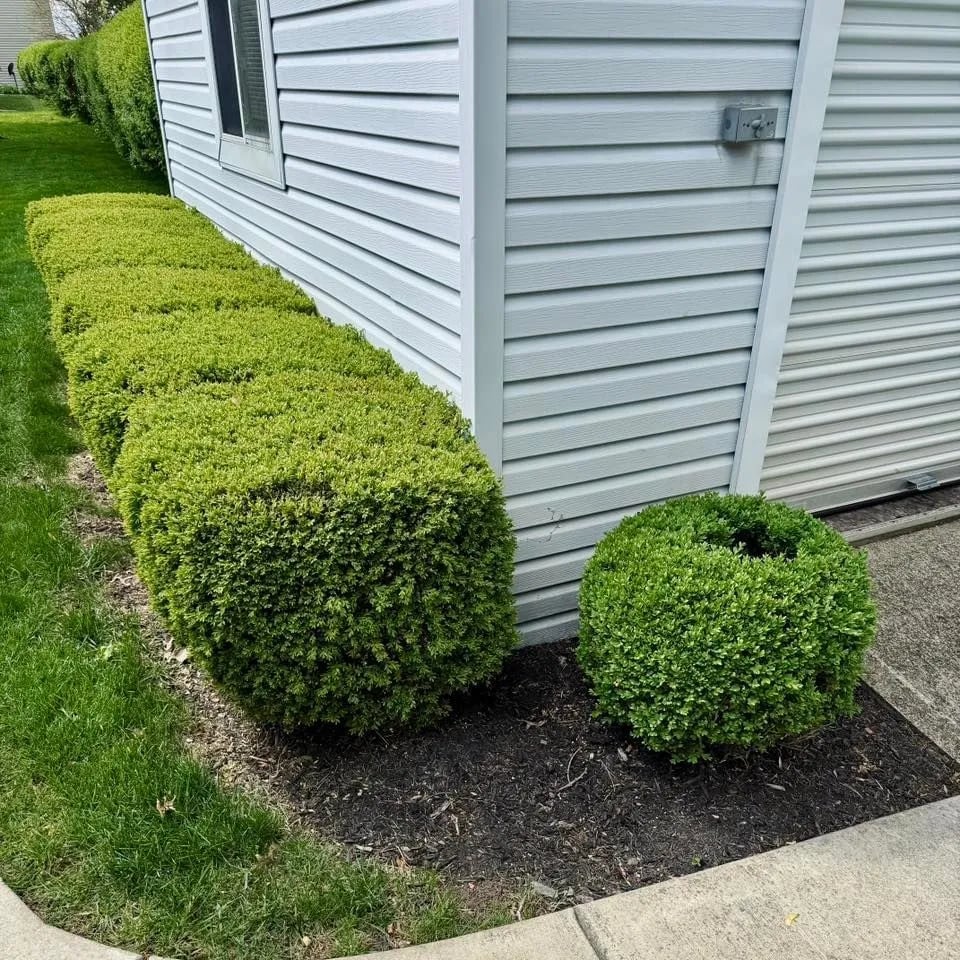
Boxwood (Buxus). The go-to for foundation plantings and hedges. Evergreen, tidy, and takes pruning well. 'Green Mountain' and 'Wintergreen' varieties hold their color through Indiana winters without bronzing.
Hydrangea (Hydrangea paniculata). Unlike the fussy bigleaf hydrangeas, panicle hydrangeas bloom reliably every year regardless of winter cold. 'Limelight' and 'Little Lime' are proven performers that pump out white-to-pink blooms from mid-summer through fall.
Ninebark (Physocarpus opulifolius). A native shrub with dark foliage varieties like 'Diabolo' and 'Summer Wine' that add contrast to traditional green plantings. Tough as nails and handles our clay soil without complaint.
Black-Eyed Susan (Rudbeckia). The classic Indiana perennial. Golden yellow blooms from July through September, drought-tolerant once established, and deer tend to leave it alone.
Coneflower (Echinacea). Purple, pink, white, or orange — coneflowers are bulletproof in Indiana gardens. They attract butterflies and goldfinches, handle heat and humidity, and bloom for weeks.
Ornamental Grasses. Switchgrass and little bluestem are native prairie grasses that add movement, texture, and winter interest. Unlike non-native miscanthus, they won't spread aggressively and they're perfectly adapted to our soil and climate.
Some popular landscape plants struggle in our heavy clay. Rhododendrons and azaleas need acidic, well-drained soil that most Indiana yards don't naturally have. Leyland cypress grows fast but is prone to disease in our humid summers. Japanese maples can work but need protected spots out of drying winter winds. When in doubt, lean toward plants native to the Midwest — they've been handling Indiana conditions for thousands of years.
Not sure what will work in your yard? We walk properties, test soil, and design plantings that look great and actually survive. Reach out and we'll help you pick the right plants from the start.
Let us design and install a landscape that thrives in Indiana. Plants, trees, beds — we handle it all.